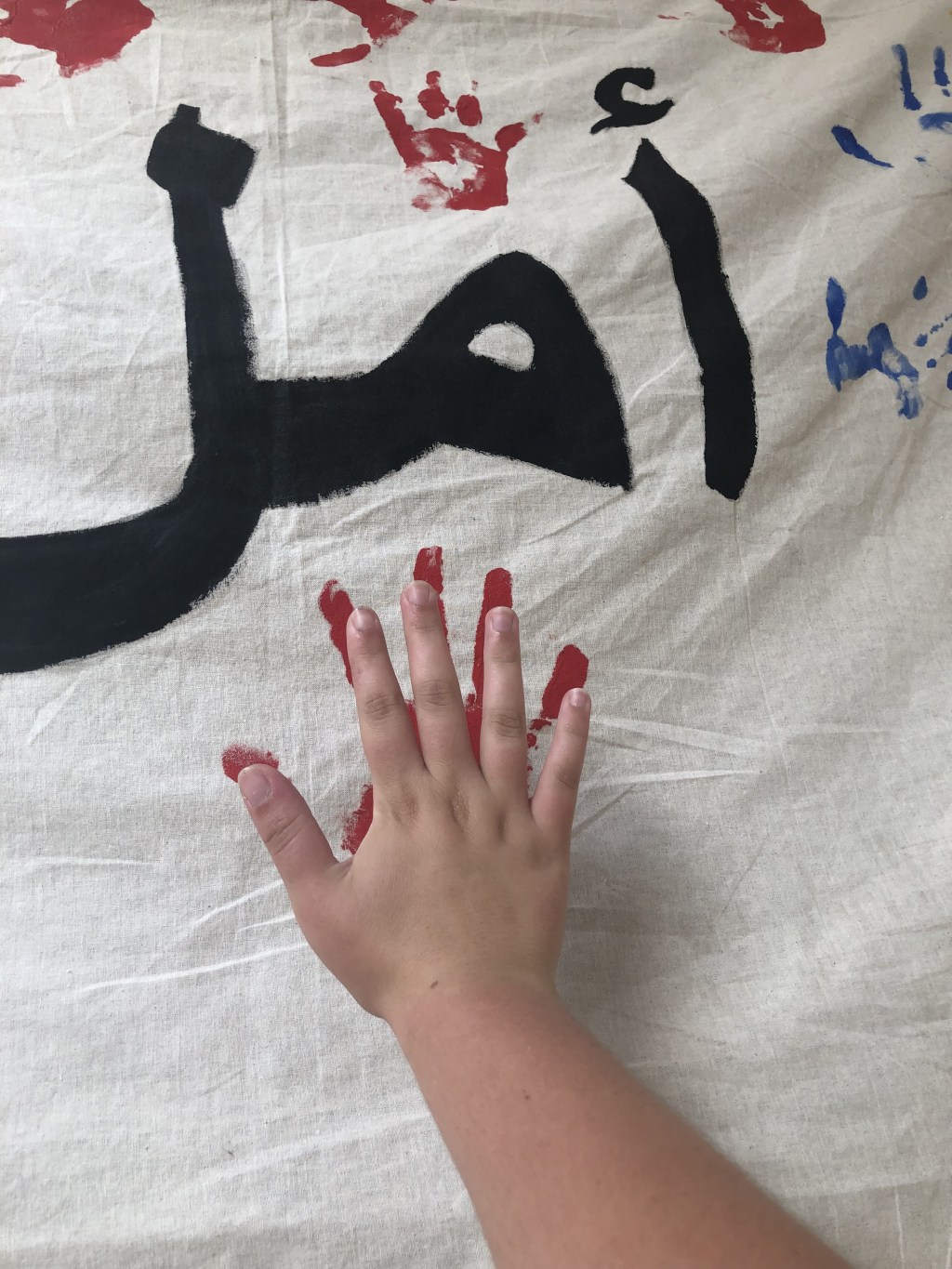
Love
“love is the greatest thing there is” (1 Cor 13: 13)
On our way back home to Malta from Egypt, we had a stop in Rome. The time between arriving at the gate and boarding the plane was one of the most stressful points in my life. In hindsight, it would have been a big inconvenience; not much more. When I was there, it felt like a disaster.
After a collective eleven hours travelling, following twenty four intensive days in Egypt, nothing seemed worse than missing a flight.
For some reason, one airline had miscommunicated our information to the other. It left us with useless tickets. We would not be able to board the plane.
Organising a summer camp for a hundred or so children is no easy feat. It bonds you and creates a unique group efficiency. We argued as a collective mass of panicked, exhausted volunteers. Even those in the group usually composed and reserved were adamantly demanding we get on the plane.
With extreme efficiency, I was informed that the next flight home was in three days. Even the two hour delay had been excruciating.
We had to get on the plane.
Over an hour arguing with the gate managers left us with nothing. Since we were not in the airline’s system, they could not bring us on board. They would not be insured if anything were to happen. They had called all the parties involved, even handed me the phone on speaker to prove a point. None of them could help us.
We had given up. There was really nothing we could do. I was on the phone explaining the situation to the Chaplain, still shaking with adrenaline. Behind me, I watched the others walk away from the gate, when I heard the words; you’re very lucky.
They had taken exactly five steps away when they were called back to the gate. The moment was timed so perfectly, I would not have believed it had I seen it on film.
The pilot had suddenly decided to take personal responsibility of us. We were stunned. We could get on board and go back home. And if anything were to happen to us, the pilot would be culpable.
There were likely many reasons behind the pilot’s decision, but ultimately, it was a great example of what love is.
Love can be easy to almost understand. To get the gist, but not the totality of it.
So what is love?
To grasp it further, this word, used to describe donating a kidney, a feeling for someone, or cake, we need to create some boundaries. There is a reason why the Greeks had around eight words for love.
Firstly, feelings are usually out of our control. Even if we can control them, they do not necessarily affect who we are. So, we can centre our reflection on love as an action.
If you recall the different moments in which you felt loved, there likely was an action attributed to the feeling.
Secondly, let us focus on love that can be expressed to anyone. Our life is not spent with one or two people. We interact to different degrees with many, so let us understand what we can use every day.
Many say that love entails sacrifice. That is true. Giving your seat on the bus to an elder can be an example of love. Getting up because it is your stop is not the same thing.
The word sacrifice, however, is dramatic. It brings to mind images of people giving all they have to the poor. Of working endlessly as a doctor to save lives. Of going on missions abroad to aid in disaster relief.
All of that is good, important and can be motivated by love. Yet, the small daily sacrifices we make can be more meaningful than any heroic deed. And it can be coming out of a purer form of love.
So what is love?
If we can understand it, maybe we can see love as more than a feeling, or an action. We can see it as a way of life, something we allow to influence both our minor and major actions
Questions:
Bring to mind moments in which I felt loved. (Spend some time on this)
What actions were common to the different moments?
What made the action one that is loving?
Am I living in a way that enables me to create moments that make others feel loved?
Am I being loving towards everyone, or am I choosing whom to be loving towards?
If I decide to make our purpose to love, what would that mean for who we become? How would I need to change?
St Thomas Aquinas described love as ‘willing the good of the other’. What does that mean for us?
 Reflections
Leave a comment